How to prevent root rot in your houseplants: simple habits that work
Root rot sneaks up fast and can kill a healthy plant. Here’s how to spot the warning signs, avoid mistakes and save your houseplants.
Root rot can sneak up on anyone. One day your plant looks fine, the next it’s drooping and yellow. When I lost my first Monstera to root rot, I learned the hard way just how fast it can take over. Since then, I’ve picked up a few habits that keep my houseplants healthy and rot-free.
What is root rot and why does it happen?
Root rot is just what it sounds like, plant roots start to decay in wet, soggy soil. The most common cause is overwatering. Roots need air to survive, and too much moisture pushes out the oxygen. Fungi and bacteria move in and the roots get mushy, brown or even black. Above ground, leaves turn yellow, wilt or fall off.
Know your plant’s needs
Different houseplants have different water needs. If you treat all your plants the same, some will end up drowning. Succulents and cacti need their soil to dry out before you add more water. Ferns and calatheas like more consistent moisture, but not soggy soil. Look up your plant’s type, or ask at the shop if you’re unsure. When in doubt, less water is usually safer than more.
Get the basics right: soil and pots
Soil matters more than you think. A dense garden soil holds too much water for most indoor plants. Buy or mix a light, loose potting mix with good drainage. You can add perlite, orchid bark or even a bit of coarse sand. Skip the decorative pebbles at the bottom, those don’t help drainage and can create a water trap.
Always use pots with drainage holes. No exceptions. If you love a pot without holes, use it as a cover pot and keep your plant in a plastic nursery pot inside. That way, extra water can escape, and your roots won’t sit in the wet.
Watering habits that prevent rot
- Feel the soil before watering. Stick your finger in up to the second knuckle. If it still feels damp, wait a day or two.
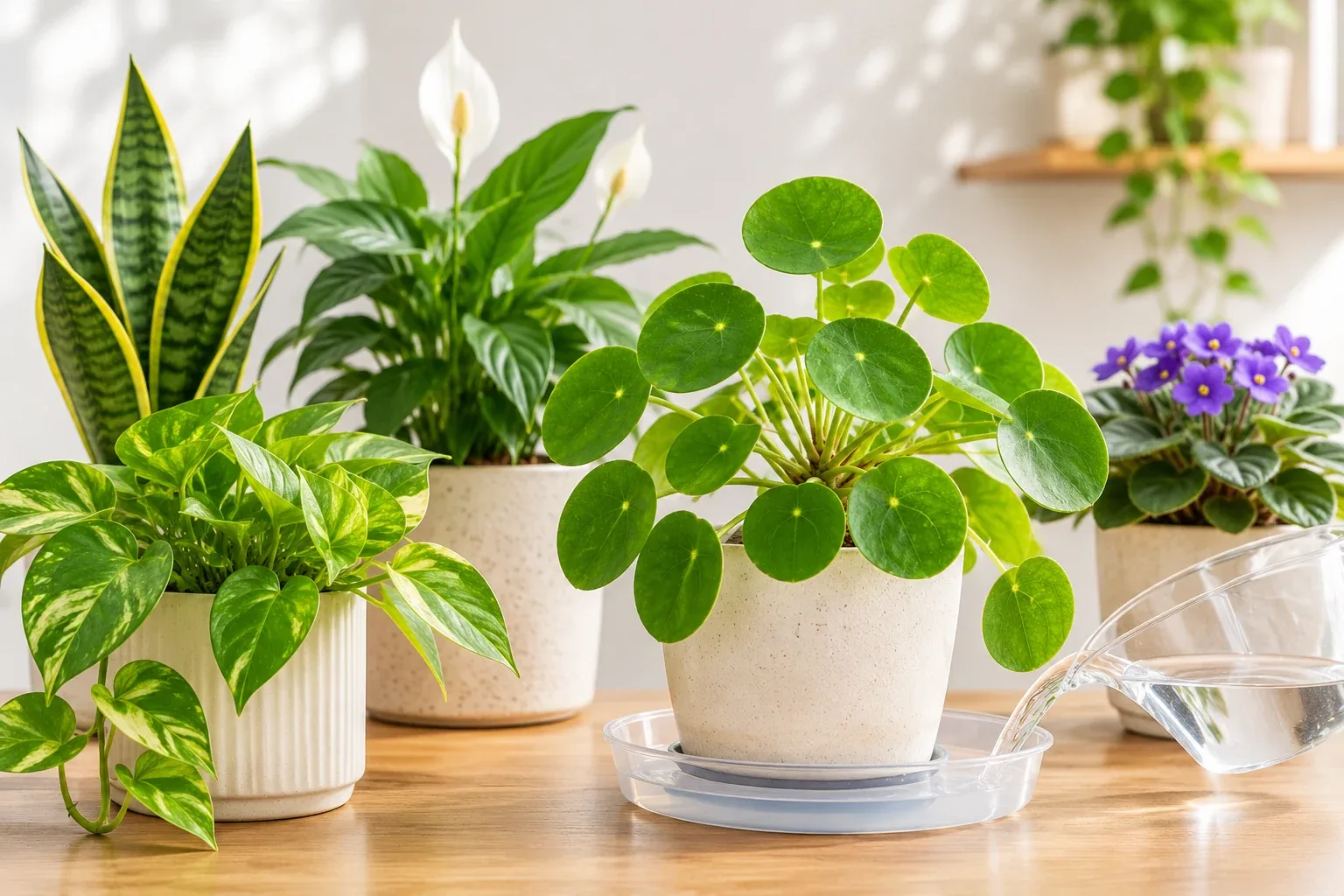
- Water slowly and evenly, until you see liquid drain from the holes. Pour out any water that collects in the saucer or cachepot.
- In winter, most plants need much less water. Growth slows, and so does water use.
- Don’t water on a routine unless you know your plant actually needs it. Plants are not on the same schedule every week.
Spot early warning signs
If your plant’s leaves start yellowing from the bottom up, or you notice a musty smell from the soil, act fast. Take the plant out of its pot and inspect the roots. Healthy roots are white or tan and firm. Brown, black or mushy roots mean trouble. Cut away the rotten roots with clean scissors, then repot in fresh dry soil. Wash the old pot before reusing it.
Avoid common mistakes
- Don’t let plants sit in water after you’ve watered them.
- Be careful with self-watering pots, some keep the soil too damp.
- If you’re not sure, underwatering is safer than overwatering. Most houseplants can bounce back from dry soil, but few survive root rot.
- Don’t upsize pots too fast. Large pots hold extra moisture, which means roots take longer to dry out.
My habit now is to check my plants every few days by touch, not by the calendar. The few extra seconds save me weeks of regret. Once root rot gets hold, saving the plant is a lot of work and there are no guarantees. If you spot the signs early, or even better, avoid them altogether, your houseplants will thank you by actually growing.