From Plant Whisperer to Plant Graveyard: How to Stop Loving Your Houseplants to Death
Five plant care videos, one pep talk and a shelf full of drooping pots later, here is why overwatering kills more houseplants than neglect, and how to keep yours thriving.
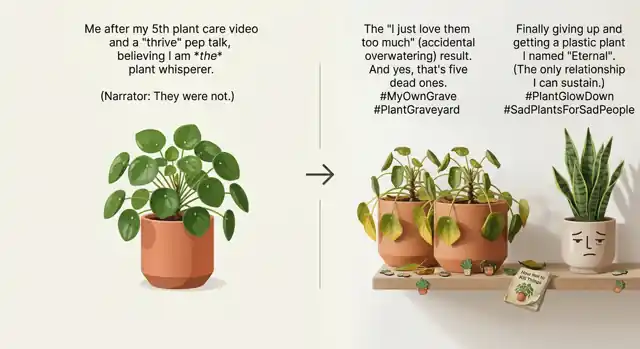
It starts innocently enough. You watch one plant care video. Then a second. By the fifth, plus a motivational "your plants just want to thrive" pep talk, you are fully convinced you are the plant whisperer. You can hear your Pilea's thoughts. You and your Monstera have an understanding.
(Narrator: They did not.)
A few weeks later, the shelf tells a different story. Drooping stems. Yellow, floppy leaves. Five pots of quiet regret, all lovingly watered into an early grave. And then comes the final stage of grief: buying a plastic plant, naming it "Eternal," and calling it the only relationship you can sustain.
The three stages of plant parenthood. We have all been at least two of them.
If that comic made you laugh a little too hard, you are in good company. Here is the not-so-funny truth hiding behind the joke, and how to make sure your next plant stays on the left side of that arrow.
The real villain: loving them too much
Look closely at the sad pots in the middle of the picture. Those limp stems and yellowing, droopy leaves are the classic signature of overwatering, not neglect. It is the single most common way houseplants die, and it almost always comes from good intentions.
Roots need air as much as they need water. When soil stays soggy, the air pockets fill up, the roots suffocate and begin to rot, and a rotting root cannot drink. The cruel twist is that an overwatered plant wilts, so it looks thirsty. Most of us respond by watering it again, and the cycle finishes the job.
How to tell if you are a serial overwaterer
- Leaves are yellow and soft, often starting with the lower ones, rather than crispy and brown.
- The plant droops even though the soil is wet. Thirsty plants droop in dry soil; drowning ones droop in damp soil.
- The soil smells sour or musty, or never seems to dry out between waterings.
- Tiny flies hover around the pot. Fungus gnats breed in constantly moist soil, so they are a handy warning light. (We have a whole guide on getting rid of fungus gnats.)
- Stems feel mushy at the base, a sign rot has already moved in.
For a deeper read of what different leaf colours are trying to tell you, see Reading the Leaves: What Yellowing Really Means.
Five habits that separate whisperers from graveyard keepers
1. Water the plant, not the calendar
"Every Sunday" is a schedule for you, not for your plant. Light, temperature, pot size and season all change how fast soil dries. Instead, push a finger two to three centimetres into the soil. If it is still damp, put the watering can down and walk away. Our guide on how often to water your houseplants goes plant by plant.
2. Give every pot a way out
A gorgeous pot without a drainage hole is basically a bathtub with no plug. Keep your plant in a plastic nursery pot with holes and slip it inside the decorative one, then empty any water that collects at the bottom. Terracotta, like the pots in our comic, also breathes and wicks extra moisture away, which is forgiving for heavy-handed waterers. More on that in Terracotta or Glazed? Choosing the Right Pot.
3. Soak thoroughly, then wait
When it is time to water, water properly: pour until it runs out of the drainage holes, let it drain, and then leave the plant alone until the top layer is dry again. A deep drink followed by a dry spell beats daily sips every time.
4. Match the plant to your light
A plant in a dim corner uses far less water than the same plant on a bright windowsill, so soil in low light stays wet longer and rot sets in faster. Most houseplants, including the Pilea in our picture, want bright, indirect light. If you are not sure what that means in your home, read Bright, Indirect Light, Explained.
5. Slow down in the colder months
Growth slows when days get shorter, and so does thirst. Stretch the gaps between waterings and skip fertiliser until spring. Our notes on winter care for tropical plants cover the rest.
Can you save the ones that are already drooping?
Often, yes, if you catch it early. Stop watering, slide the plant out of its pot and look at the roots. Healthy roots are firm and pale; rotten ones are brown, mushy and may smell. Trim away the rotten parts with clean scissors, repot into fresh, dry, well-draining mix, and hold off on water for several days. Then be patient. Our step-by-step rescue guide walks you through it.
Before you name a plastic plant "Eternal"
Here is the funniest part of the comic: that "plastic" plant on the right looks a lot like a snake plant, which happens to be one of the hardest real houseplants to kill. It thrives on neglect, tolerates lower light and only needs water when its soil is completely dry. In other words, you do not have to give up on living plants. You just need one that forgives you.
If you have a history of loving plants a little too hard, start with a resilient one. Snake plants, ZZ plants, pothos and most succulents all prefer to be under-watered rather than over-watered. Browse our picks in Top 5 Low-Maintenance Houseplants for Busy Lives or get to know the snake plant properly.
The takeaway
Being a plant whisperer has less to do with how much attention you give and more to do with knowing when to hold back. Check the soil before you pour, give the roots somewhere to drain, and let your plants dry out between drinks. Do that, and your shelf will stay firmly on the "thriving" side of the arrow, no pep talk required.
Ready to try again? Find hardy, beginner-friendly houseplants and well-draining planters at Midorika Shop, and give your green thumb the second chance it deserves.